


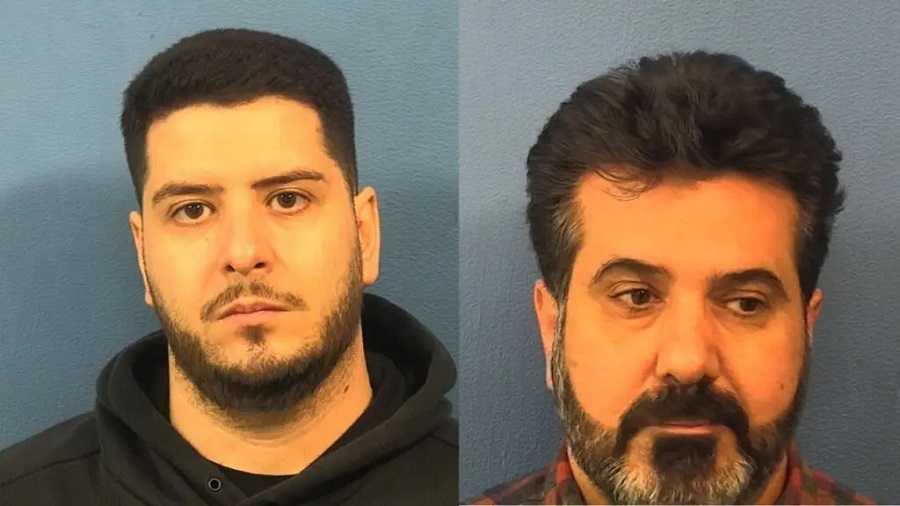
Two men from Naperville and Glendale Heights have been arrested and charged after allegedly orchestrating a fake jewelry robbery that was initially reported to be worth over $1 million. Mahmood Bashang, 30, of Naperville, and Pezhman Gilani Yahyavi, 46, of Glendale Heights, are accused of fabricating an elaborate story about being victims of a violent robbery and filing a false police report with Elmhurst authorities on February 22.
The pair told police that they had just left a jewelry show in Rosemont and were heading home when three armed individuals forced them off the road, stealing between $1.5 million and $2 million worth of jewelry. According to the initial report, most of the stolen items were 14k gold jewelry pieces. The details of the robbery raised immediate concerns and prompted a full-scale investigation by law enforcement.
Authorities reacted swiftly to the report, deploying officers from Elmhurst, Bensenville, and Rosemont to investigate the alleged crime scene, interview witnesses, and analyze evidence. However, after further investigation, police began to notice inconsistencies in the story. It was soon determined that the robbery was staged. Investigators now believe Yahyavi intentionally drove his vehicle off the road in a bid to create a scene resembling a robbery. The jewelry described in the report was never found, and the initial claims were soon deemed fraudulent.
Both Bashang and Yahyavi have been charged with disorderly conduct for filing a false police report, which is classified as a Class 4 felony in Illinois. False reporting of crimes is a serious offense, as it not only wastes critical law enforcement resources but can also divert attention from real emergencies. The pair is scheduled to appear in court on March 23.
Investigation and Resources Spent on the Case
The police investigation into what was thought to be a multimillion-dollar jewelry heist involved a significant commitment of time and resources by local authorities. Elmhurst Police Chief Michael McLean expressed frustration about the incident, noting that officers from three different departments had spent hours investigating the false claim. McLean stated, “What initially appeared to be a serious robbery investigation ended up being a scheme to defraud, and it used valuable resources that could have been directed toward real crimes.”
The fact that the case was ultimately deemed fraudulent highlights the importance of thorough investigations and the scrutiny law enforcement applies to reports of major crimes. Investigators used various tools, including vehicle forensics, witness statements, and phone records, to piece together the truth. While the specific methods used to determine the robbery was false have not been publicly detailed, the case underscores the thoroughness of the investigation.
The Consequences of False Reports
This incident serves as a reminder of the consequences of falsely reporting a crime. False police reports not only waste valuable public resources but can also harm innocent individuals by potentially causing wrongful arrests and diverting attention from real threats. Law enforcement agencies urge the public to report crimes accurately and truthfully to ensure police efforts remain focused on addressing genuine criminal activity.
False reports can also strain local communities, particularly when police must mobilize a large number of personnel to investigate what turns out to be a baseless claim. In this case, the resources used in the investigation could have been better spent on addressing other criminal matters or preventing actual crimes.
Both suspects are expected to face further legal proceedings, and the outcome of the case could set a precedent for similar offenses in the future. Illinois law carries significant penalties for filing false reports, including fines and potential jail time, depending on the circumstances and severity of the offense.
The case also raises questions about the potential for financial gain through fraudulent schemes, particularly when valuables such as jewelry are involved. Investigators continue to examine the pair’s motives and whether they intended to use the false report to claim insurance or sell the items that never existed.
